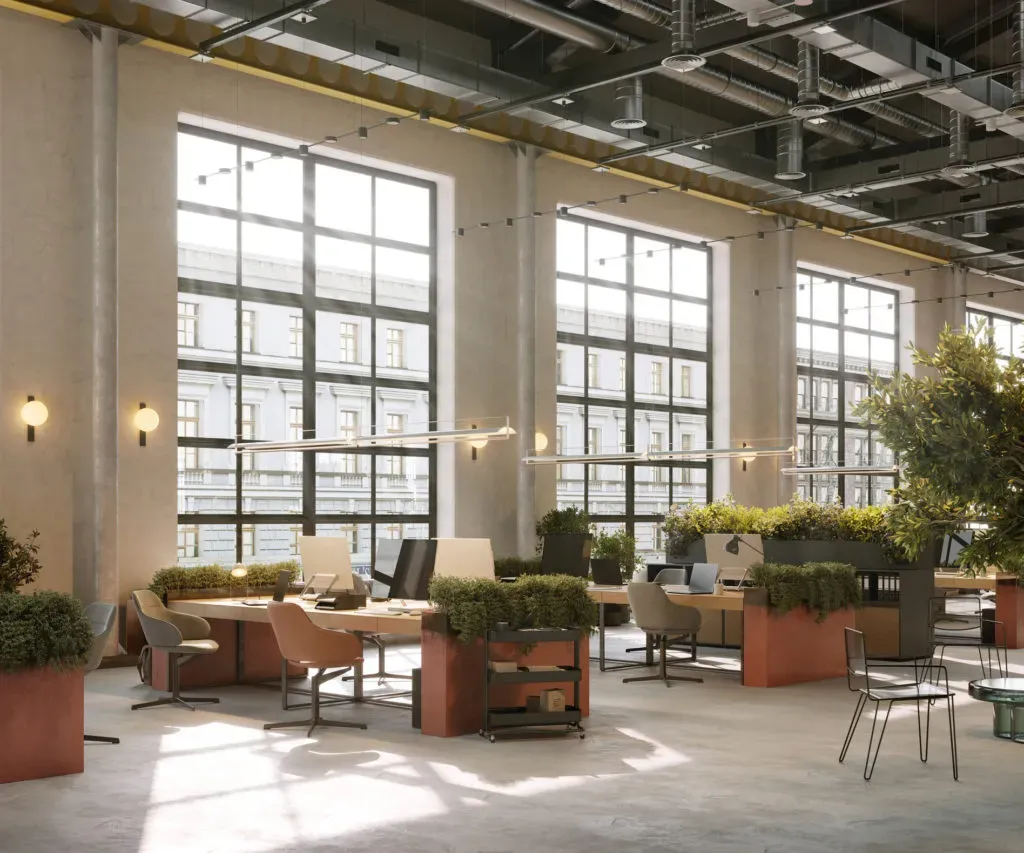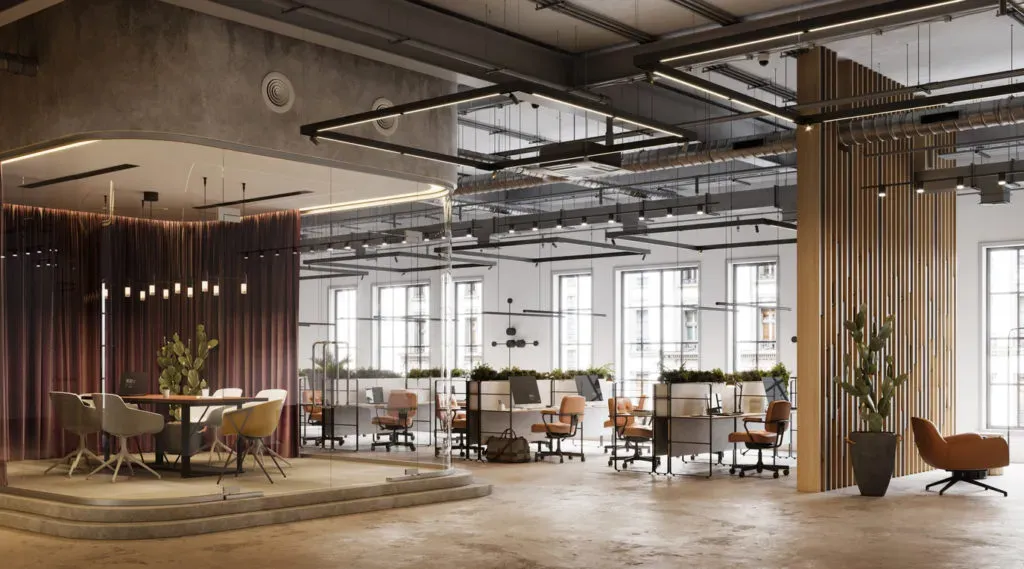
What are you waiting for? The vision for the office of the future is already clear today. We show you 5 trends of tomorrow and how you can implement them right now.
What requirements await the office of tomorrow?
The way we work is changing, as are the expectations of your employees and the available digital possibilities. The office of tomorrow and its features are derived from these mega trends, as documented in studies by the Fraunhofer Institute:
- Hybrid Models: 52% of employees prefer to work hybrid rather than in a classic office environment (according to Microsoft).
- AI & Collaboration: Thanks to Artificial Intelligence, solo deep-work is decreasing while collaborative group work is increasing.
- Health Focus: Mental and physical health is becoming a top priority.
- Eco-Consciousness: Sustainability plays a significantly larger role in corporate identity.
- Smart Tech: Digitalization is enabling more efficient and seamless cooperation.
A Bonus: With the increasing shortage of skilled workers, top candidates place a higher value on a pleasant work environment. The office is evolving into a critical recruiting factor.
5 Trends: What does the office of the future look like?
Let’s look ahead to the office of 2030. How will its interior architecture look? Who uses it, when, and how?
The workstation is getting smaller
Even post-pandemic, more employees prefer working from home, either entirely or for several days a week. Therefore, New Work requires less office space per building. The trend is shifting toward several small, local offices in the cities where employees actually live.
To avoid empty desks and wasted costs while ensuring space for everyone, booking systems are key. Employees register in advance for specific times and reserve rooms or individual desks.
The office world is becoming more diverse
The classic, fixed office desk is disappearing. Individual tasks, making calls, handling paperwork, are primarily done in the home office. In the physical office, these are handled at shared locations: bookable phone booths or temporary "hot desks."
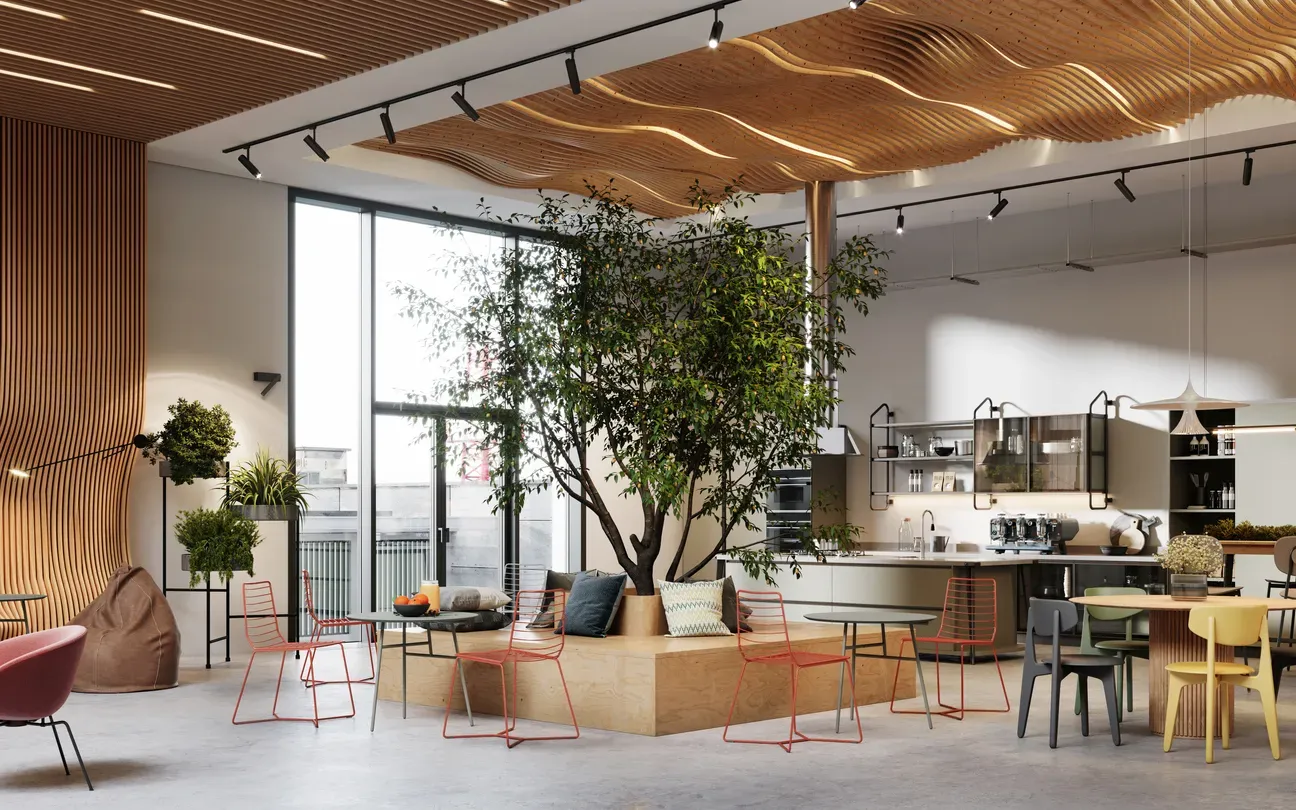
This makes room for a new focus: Modern working worlds are cooperative, creative, and a center for exchange. In the future, there will be more space for:
- Teamwork: Conference rooms, project spaces, and modern open-plan collaboration zones.
- Social Interaction: Cafés, lounges, and recreation areas like foosball or gaming zones.
- Leisure: Quiet rooms, green areas, and sports facilities to help employees de-stress.
Digitalization leads to the "Smart Office"
The keyword for innovative office concepts is the Internet of Things (IoT). In a smart office, the team and the infrastructure are fully networked:
- Workstations, conference rooms, and quiet zones are all bookable online.
- The digital office measures room occupancy and redirects employees to available spaces.
- The building regulates temperature, lighting, and air quality automatically.
- Tables, windows, and walls serve as screens or projection surfaces.
- Software works seamlessly across smartphones, tablets, and PCs, on-site and at home.
Better health through modern design
Back pain from sitting too long and rushing to the gym after work? That’s a thing of the past. New office concepts resemble wellness or fitness centers:
- Standing desks and ergonomic chairs relieve the musculoskeletal system.
- Digital assistants ensure constant fresh air, optimal temperature, and balanced lighting.
- Integrated leisure options reduce work-related stress and promote mental health.
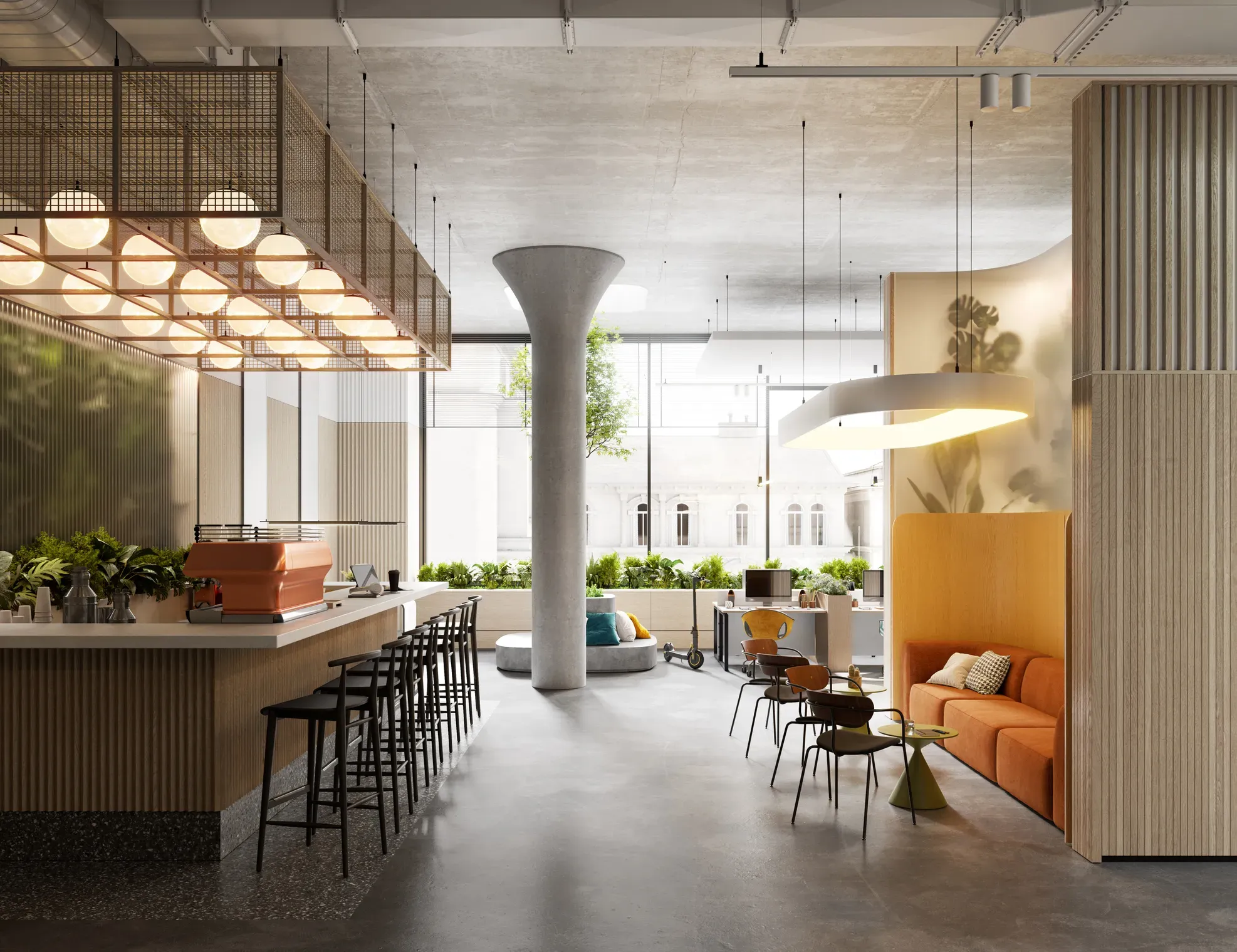
3d rendering of modern office cafeteria. Interior of office cafe with high chairs at the counter.
Interior architecture can help reduce absenteeism and increase the overall productivity of the team.
The architecture of the office building is shifting
As the interior architecture changes, so does the architecture of the entire building. Office buildings are becoming smaller, or, as seen in modern hubs, they house the working worlds of multiple companies under one roof.
Sustainability is a fixed component of every concept. Buildings are becoming "green" in the truest sense: through extensive planting that reduces emissions, improves air quality, and provides shaded spots for lunch breaks. The focus of the building is increasingly on meeting places: cafés, restaurants, green spaces, and sports areas. The actual "office rooms" are moving into the background.