The Show Kitchen as a Stage

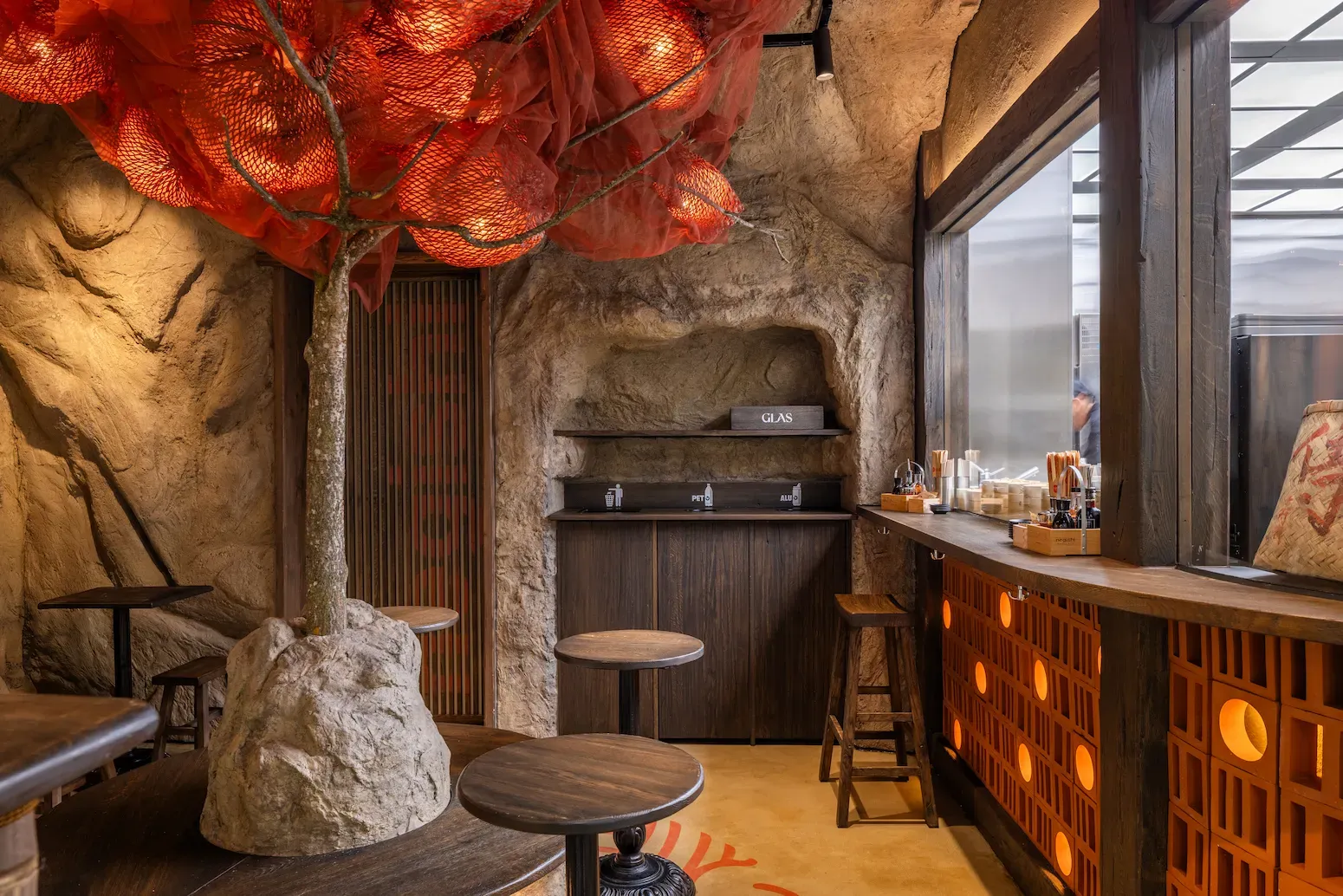
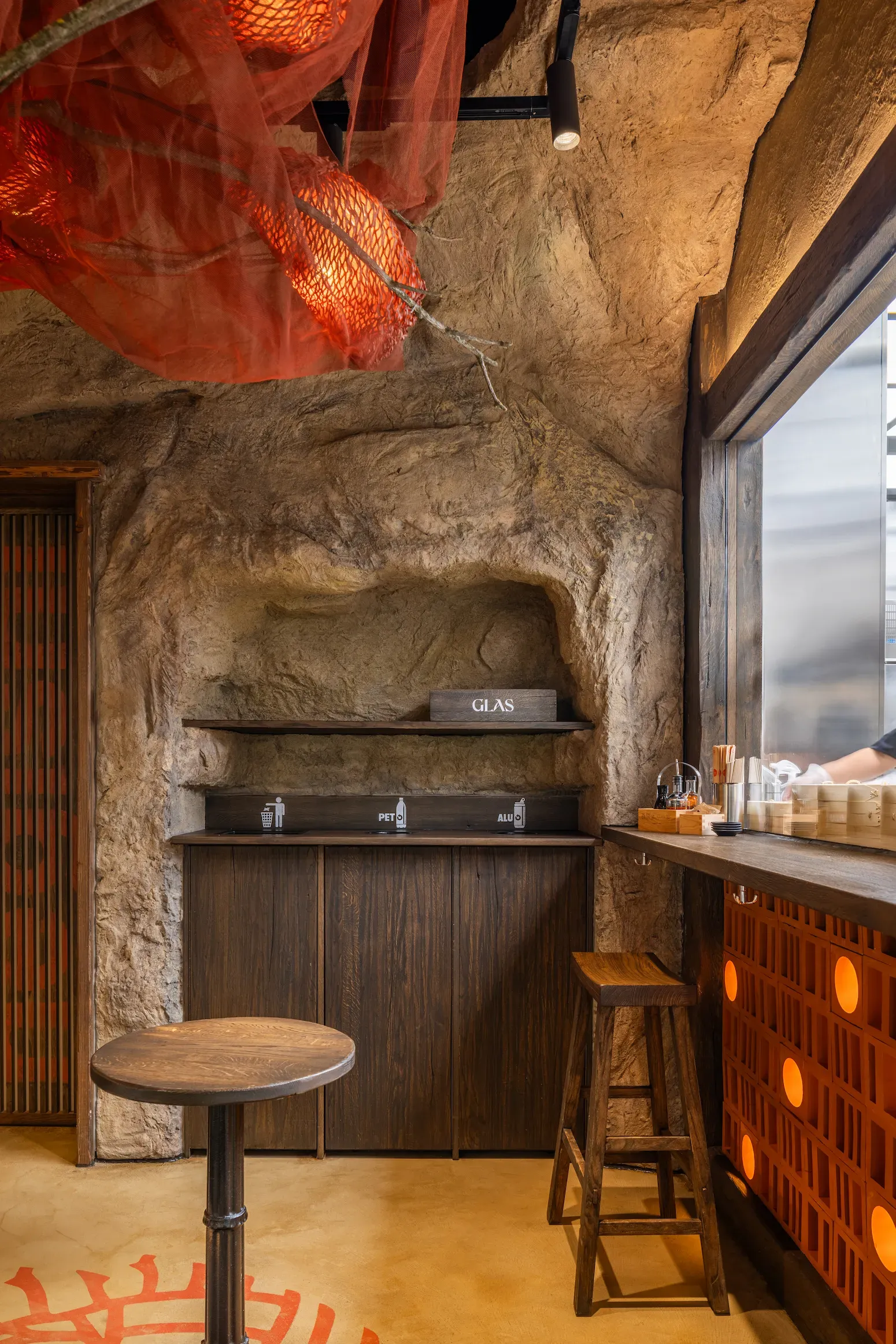
Sitznische in Kunstfelsen: Baum mit rotem Lichternetz, runde Bistrotische und Holzhocker.

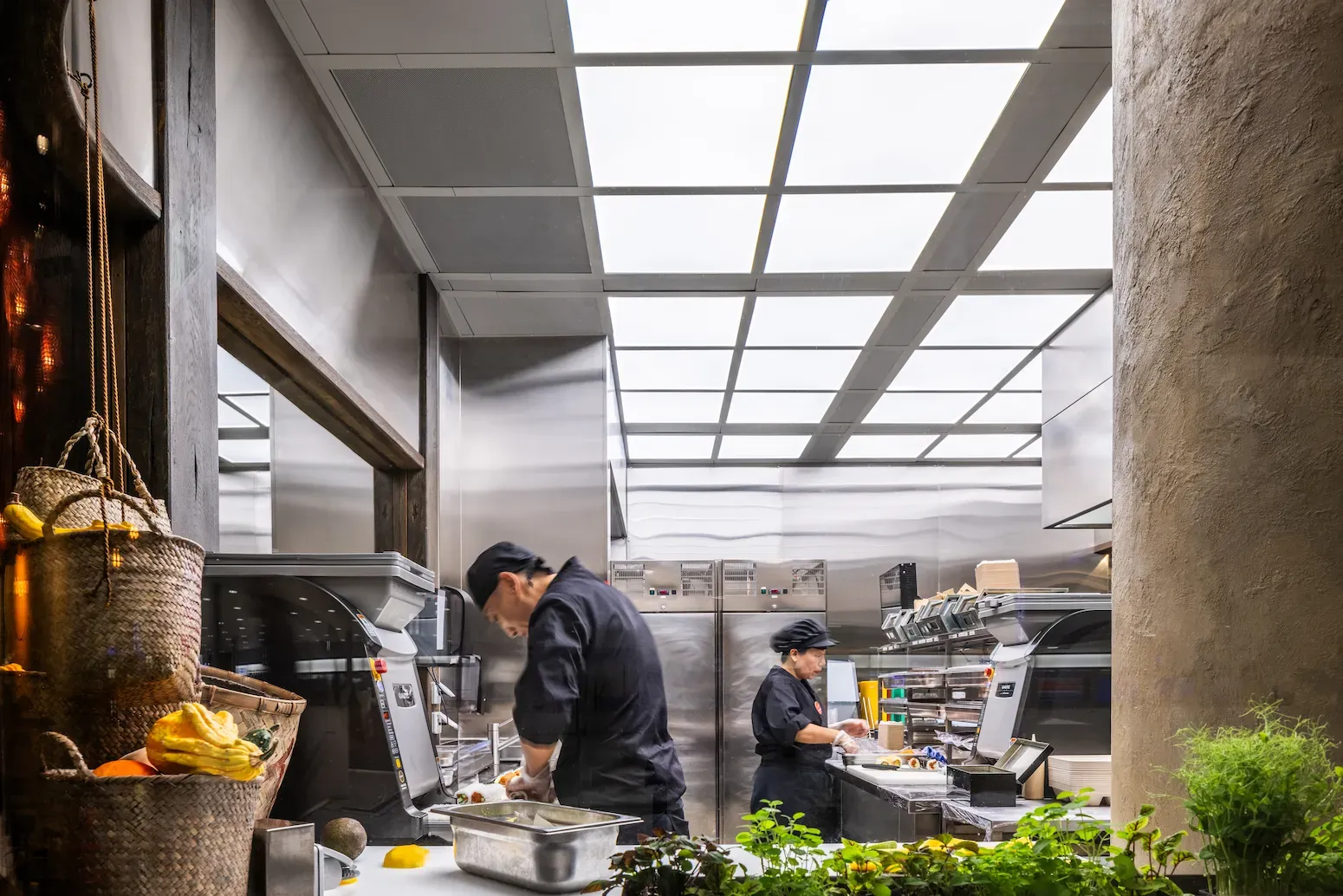
At the heart of this 80 m² take-away at Zurich Main Station is the show kitchen, intentionally open, visible, and uncompromisingly precise. Executed in stainless steel with a clean laboratory aesthetic, the craft of sushi is staged like an experiment: clean, focused, and transparent. The kitchen becomes a performance stage where precision and quality are tangible in an urban context.

High-Tech Meets Heritage

The deliberate contrast between the technical show kitchen and earthy materials defines the spatial concept. Stainless steel and glass convey precision, while raw surfaces provide depth.
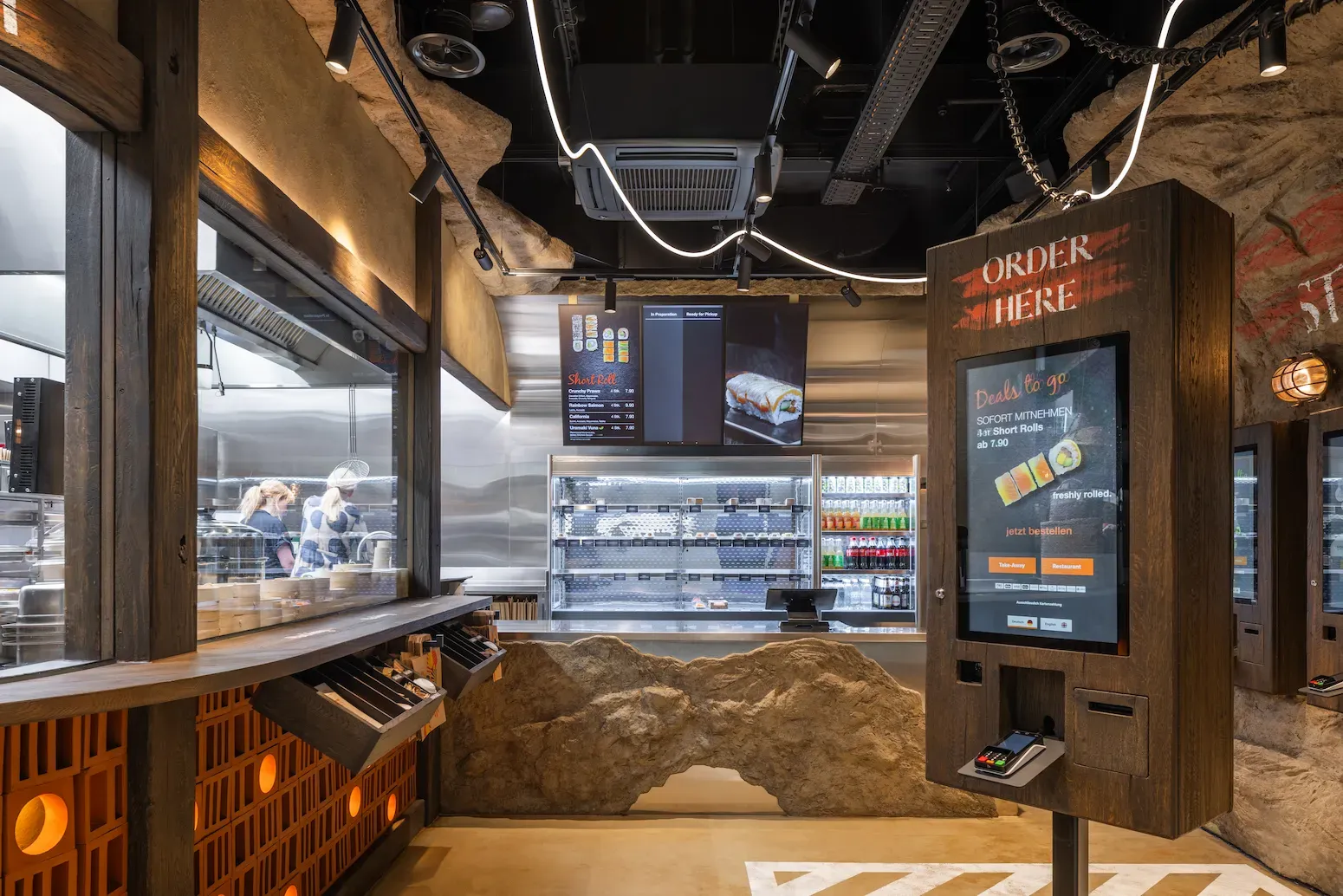
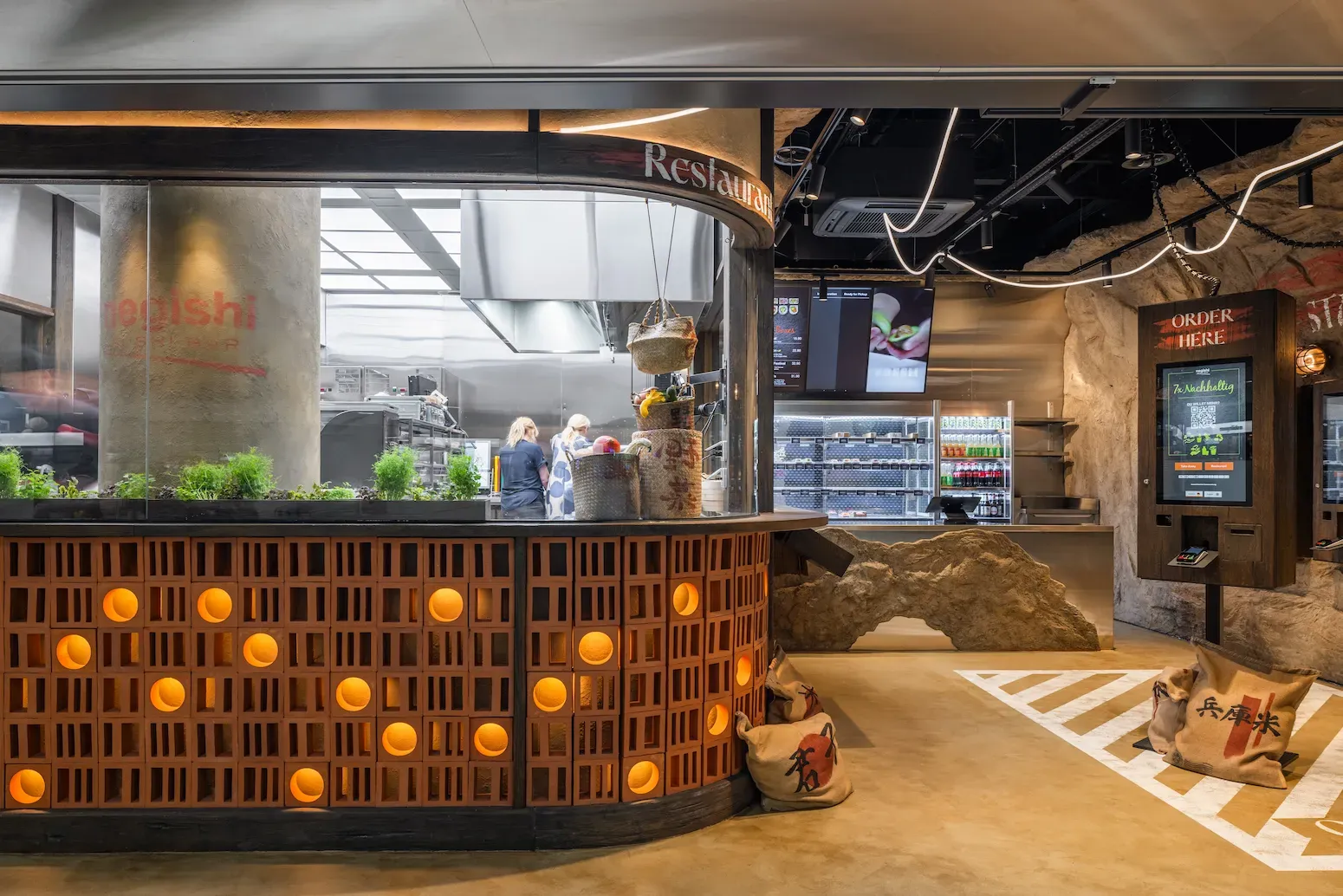
Bestellterminal 'Order Here' vor Felsstruktur mit Menüscreens im Negishi Zürich HB.
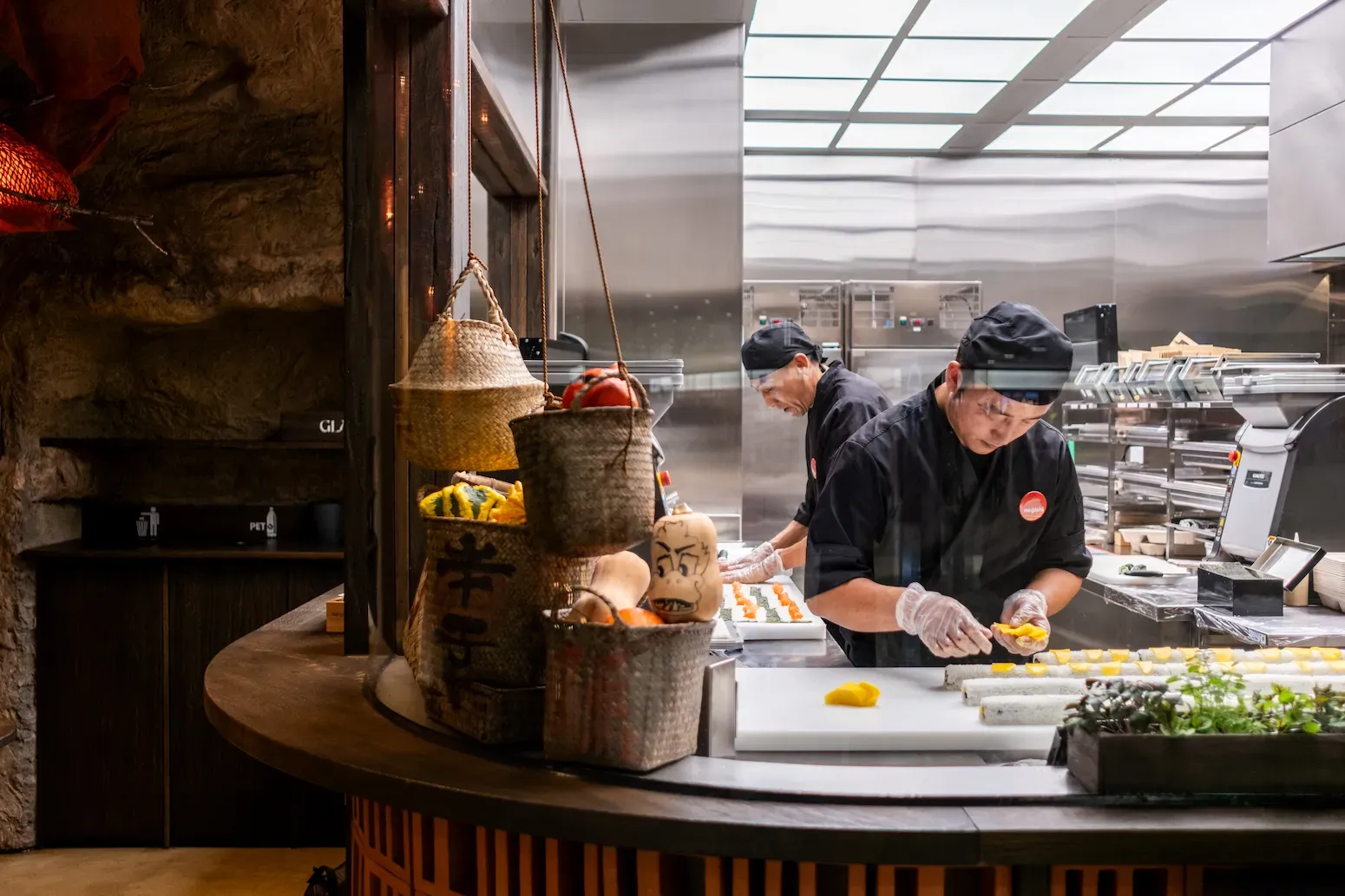
Köche rollen Sushi an der offenen Theke, umgeben von Flechtkörben mit Gemüse.
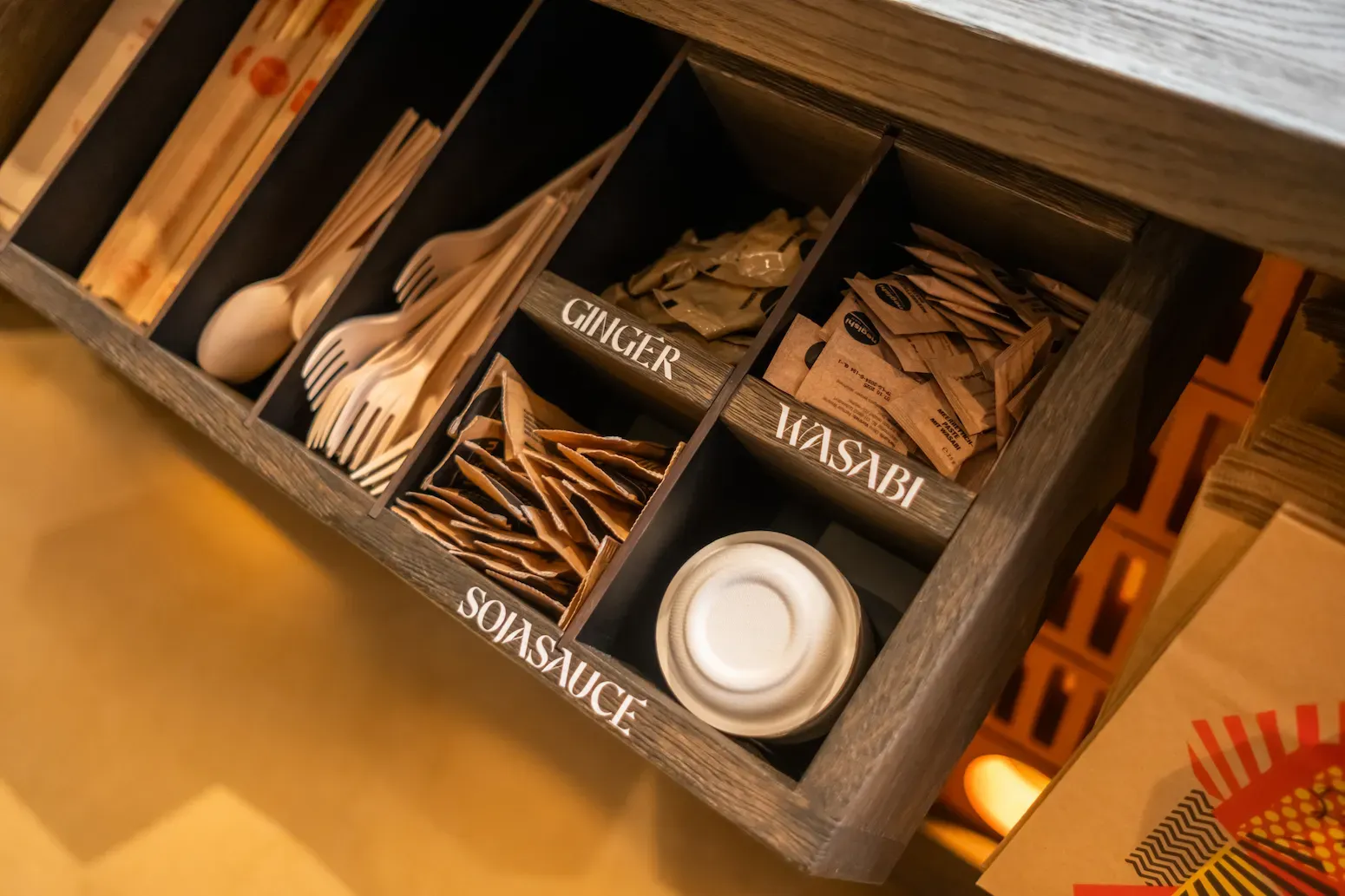
Schublade mit Holzbesteck, Ginger, Wasabi und Sojasauce in Portionspackungen.

Japanese Symbolism Reinterpreted

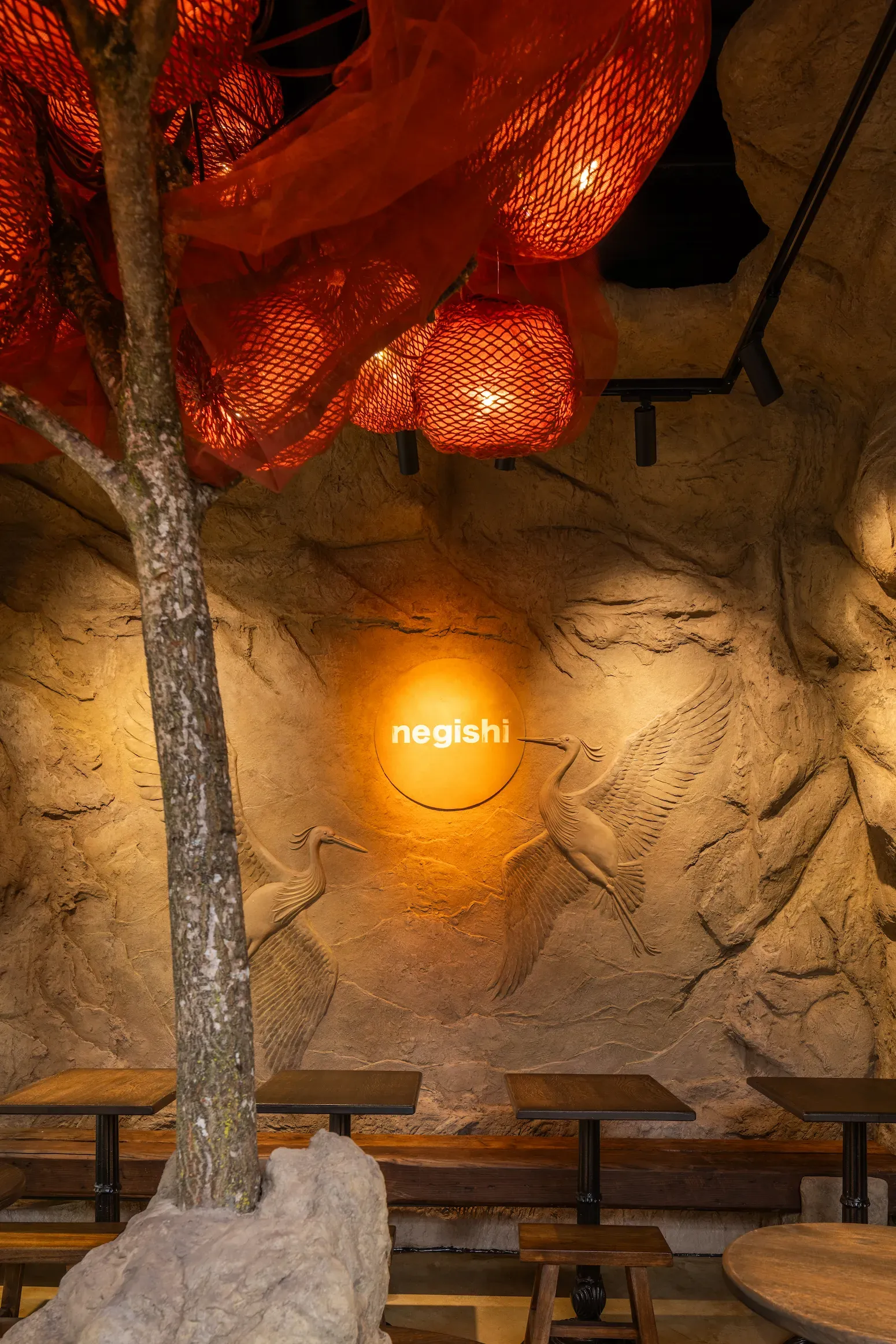
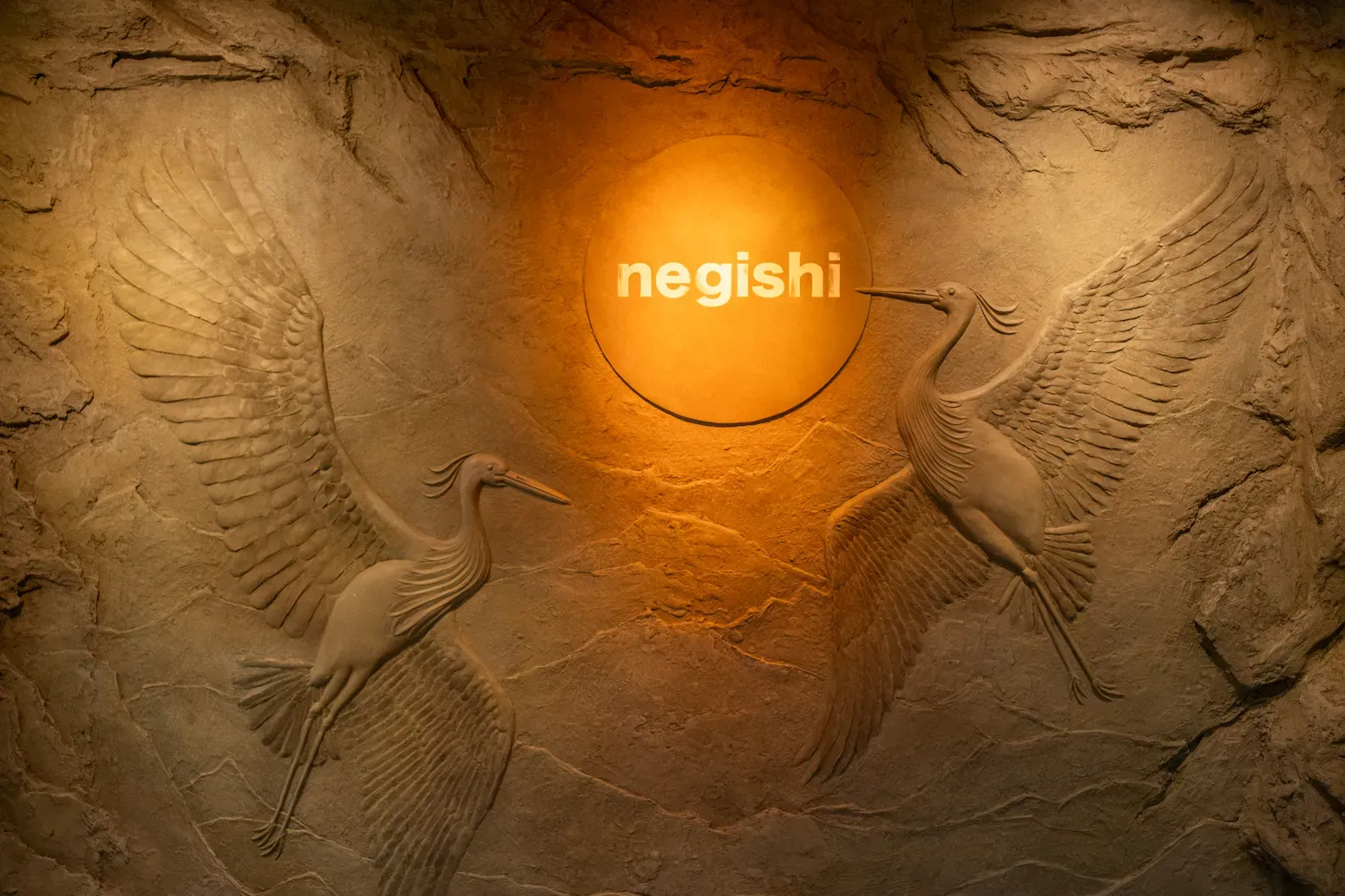
An abstract Edo Garden surrounds the kitchen. Organic forms and custom wall art featuring storks translate traditional Japanese symbolism into contemporary interior architecture.

Kunstbaum mit roten Netzlaternen vor Kranich-Relief und Holztischen im Negishi Zürich HB.
Recycling-Nische mit PET-, Glas- und Alu-Behältern in der Felswand, Barhocker aus Holz.

The Rising Sun in Detail

Custom-developed terracotta bricks around the show kitchen feature a circular motif—a subtle, abstracted reference to the rising sun of Japan.

Kranich-Relief aus Stein mit beleuchtetem 'negishi'-Logo an der Felswand im Zürcher HB.
Edelstahlküche unter leuchtender Rasterdecke: zwei Köche und Hängekörbe mit gelben Früchten.
Köche rollen Sushi an der offenen Theke, umgeben von Flechtkörben mit Gemüse.
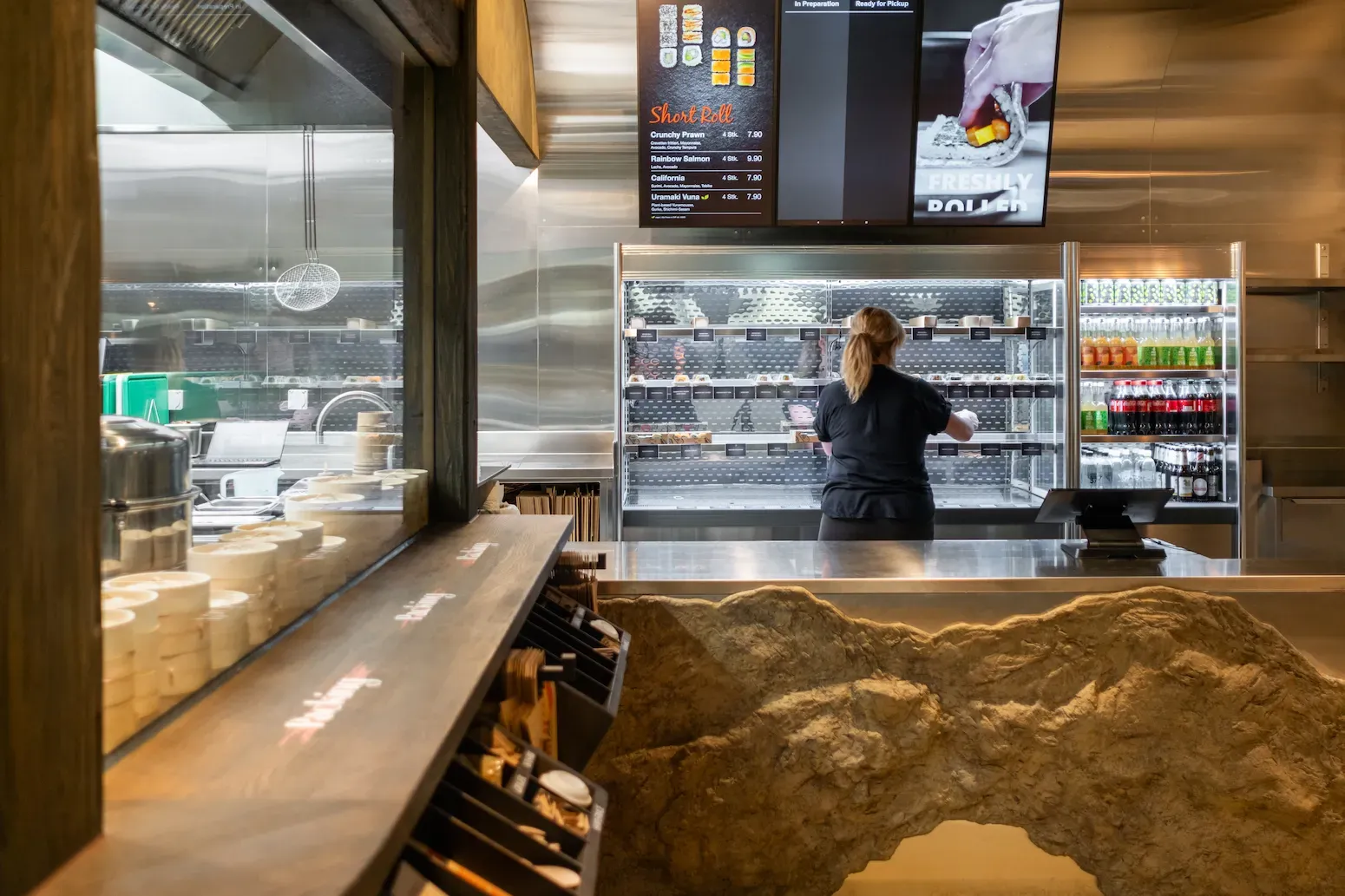
Mitarbeiterin bestückt die Kühltheke mit frischen Sushi-Rollen im Negishi Zürich HB.

Gastronomy Design: Show Kitchen & Frequency Flow

We realized a Negishi Sushi Bar at Zurich Main Station that combines take-away, dining, and a show kitchen within 80 m². The goal was to bring sushi craftsmanship to one of Switzerland’s highest-frequency locations—making it visible and immersive without compromising the efficiency of self-order and pick-up workflows.


The Design Concept: Visibility and Maximum Density

The layout centers on the open show kitchen. The planning followed a strict tension: maximizing seating density while maintaining fluid movement for guests. The kitchen is positioned to be experienced from all angles, making the culinary craft an integral part of the guest journey without operative compromises.


GALA Services List:

  • Layout & Spatial Planning: Optimizing seat count, frequency flow, and high-speed operations.
  • Show Kitchen Design: Central positioning as a visible stage for culinary craftsmanship.
  • Scenography & Storytelling: Developing the Edo Garden narrative and its spatial translation.
  • Lighting & Materiality: Creating contrast between industrial precision and historical textures.

The Added Value

Clarity Under High Frequency: A precise concept uniting visible craftsmanship and maximum efficiency in a prime urban location.

Frequently Asked Questions: Urban Gastronomy

We utilized clear movement axes between ordering and pick-up to integrate maximum seating without creating bottlenecks. Traffic areas are kept compact yet intuitive to ensure a seamless guest flow.

Through a stainless steel kitchen with a laboratory aesthetic. Cold, precise light sources focus on technique and hygiene, making the architecture a visual amplifier for the manual process.

Yes. Every choice, from layout density to material selection, is designed for longevity and easy maintenance, ensuring the brand identity remains sharp even under heavy daily use.

Next Project
Negishi Winterthur

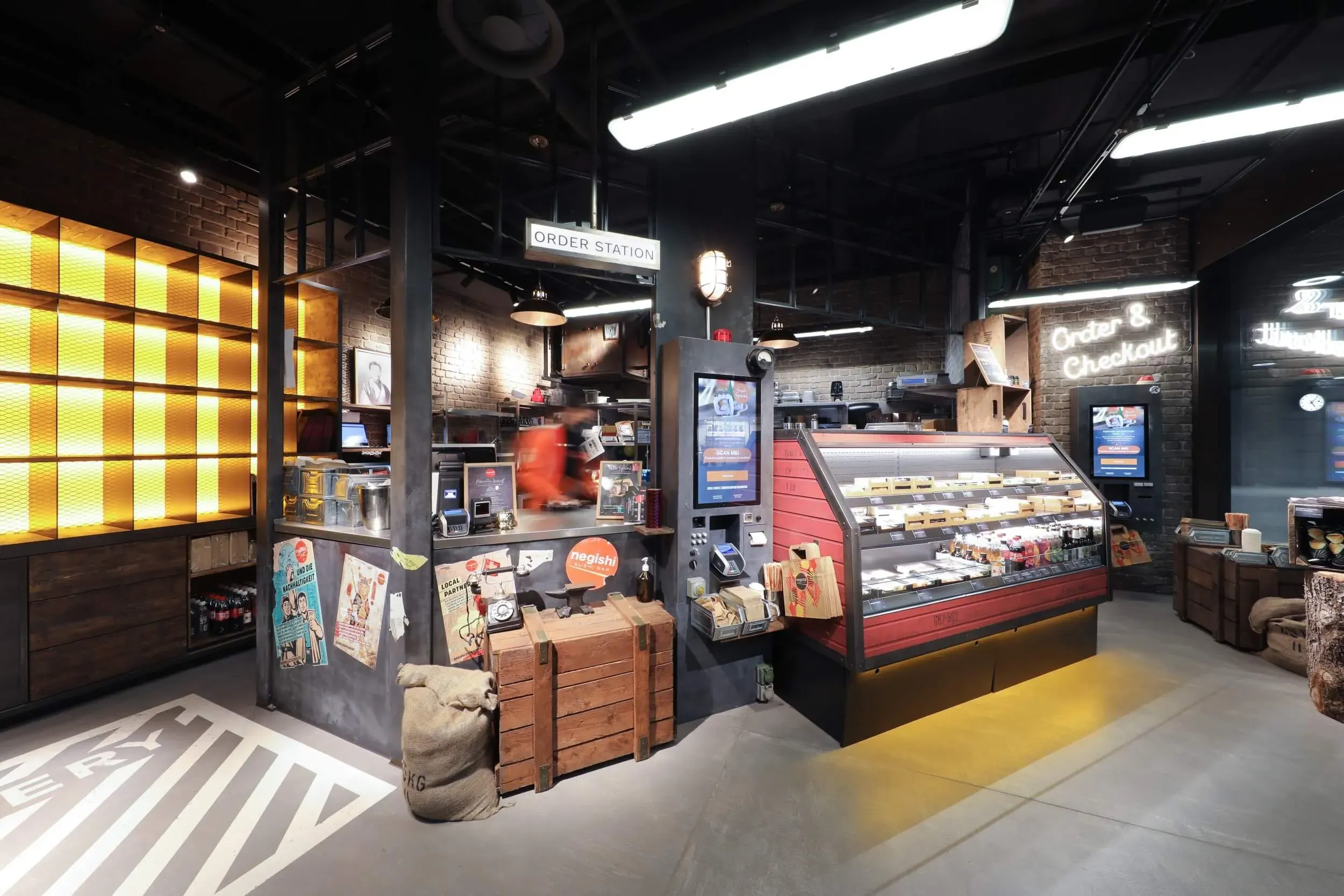
Take-away-Zone mit roter Kühltheke, gelb hinterleuchtetem Wabenregal und Neon 'Order & Checkout'.

15-minute goal-definition call

Concept, Design & Technical Planning