Staging the Freshness
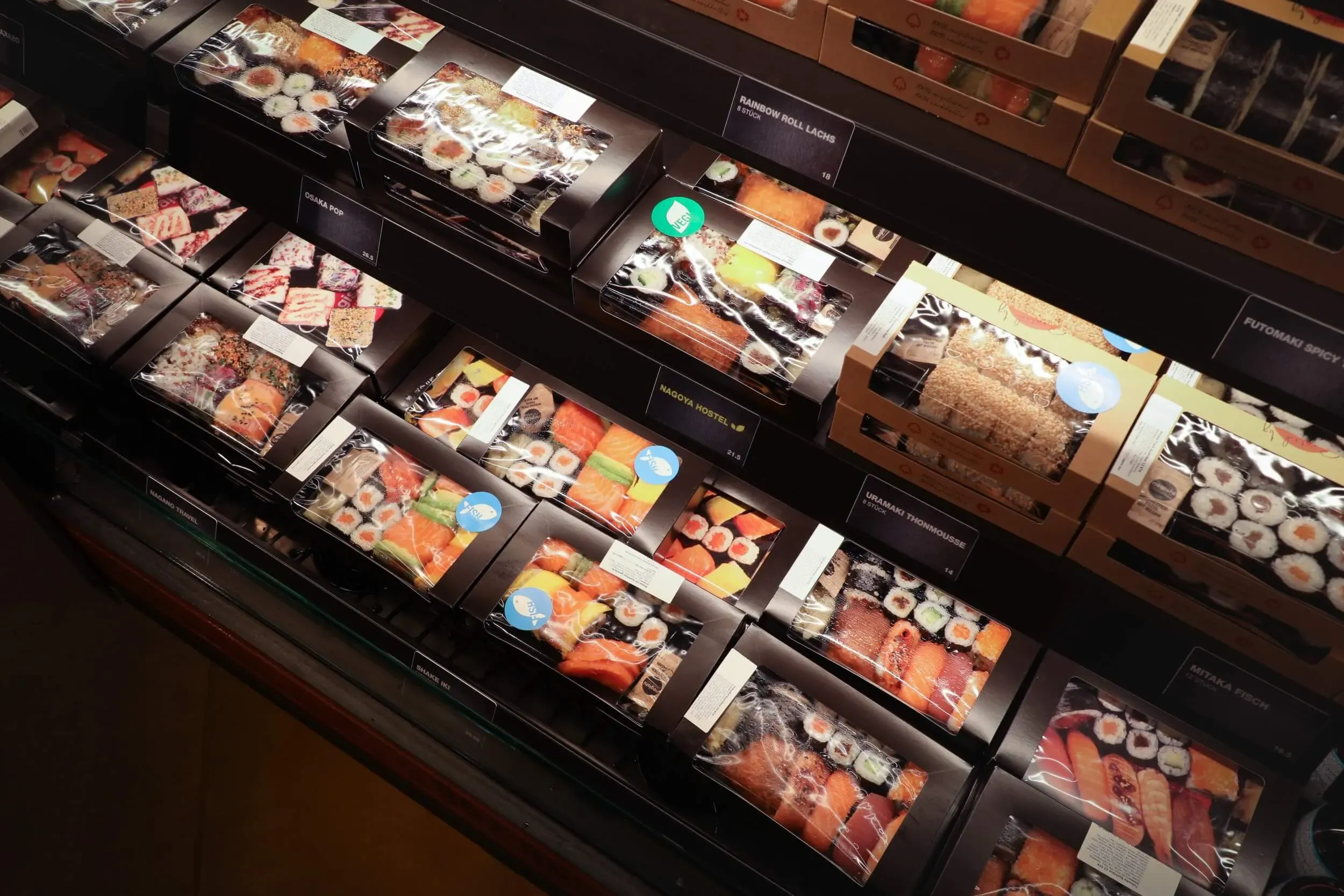
Sushi is art; we turned the counter into a stage. Through precision light design (high CRI values) and dark contrast backgrounds, the products shine, effectively driving impulse purchases in a high-traffic zone.
Client, Familie Wiesner Gastronomie AG
Winterthur Station, Switzerland
2022
Mathias Eicher
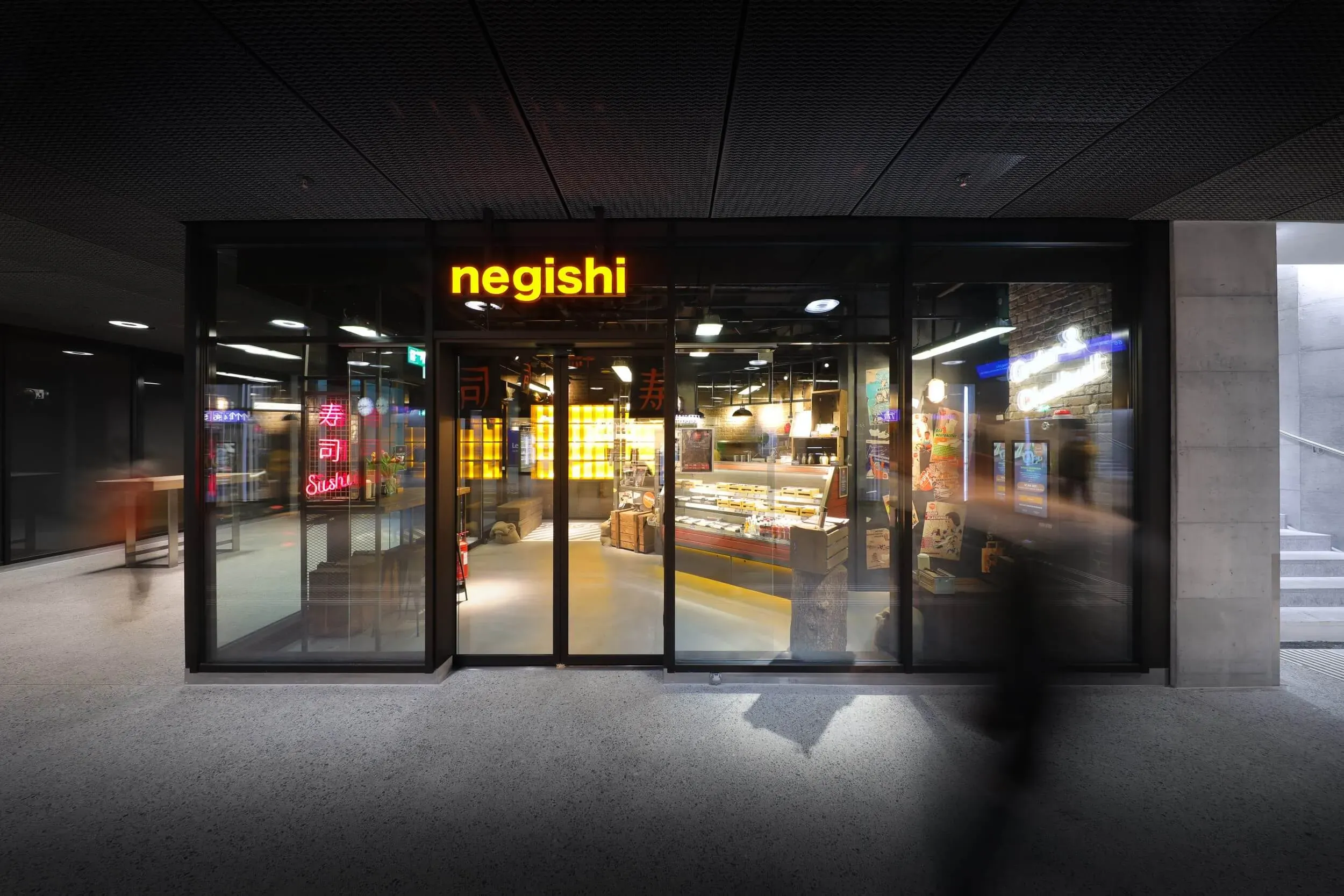
At Winterthur Station, this architectural highlight is impossible to miss. Our design concept serves the visual senses before the first bite. Amidst the commuter flow, we created an "Urban Oasis" that blends peak operational efficiency with Japanese aesthetics, a space that masters the balance between high-speed take-away and relaxed dining.
Staging the Freshness
Dwell Quality in a Transit Hub
Design Concept: The Bakumatsu Era

For the Negishi Sushi Bar at Winterthur Station, we developed an interior and brand concept born from the logic of its location: transit, speed, and density. The narrative is set in Japan’s early industrialization, a turning point where artisanal tradition met technological progress—complemented by the English industrial influences that arrived with the railway construction.
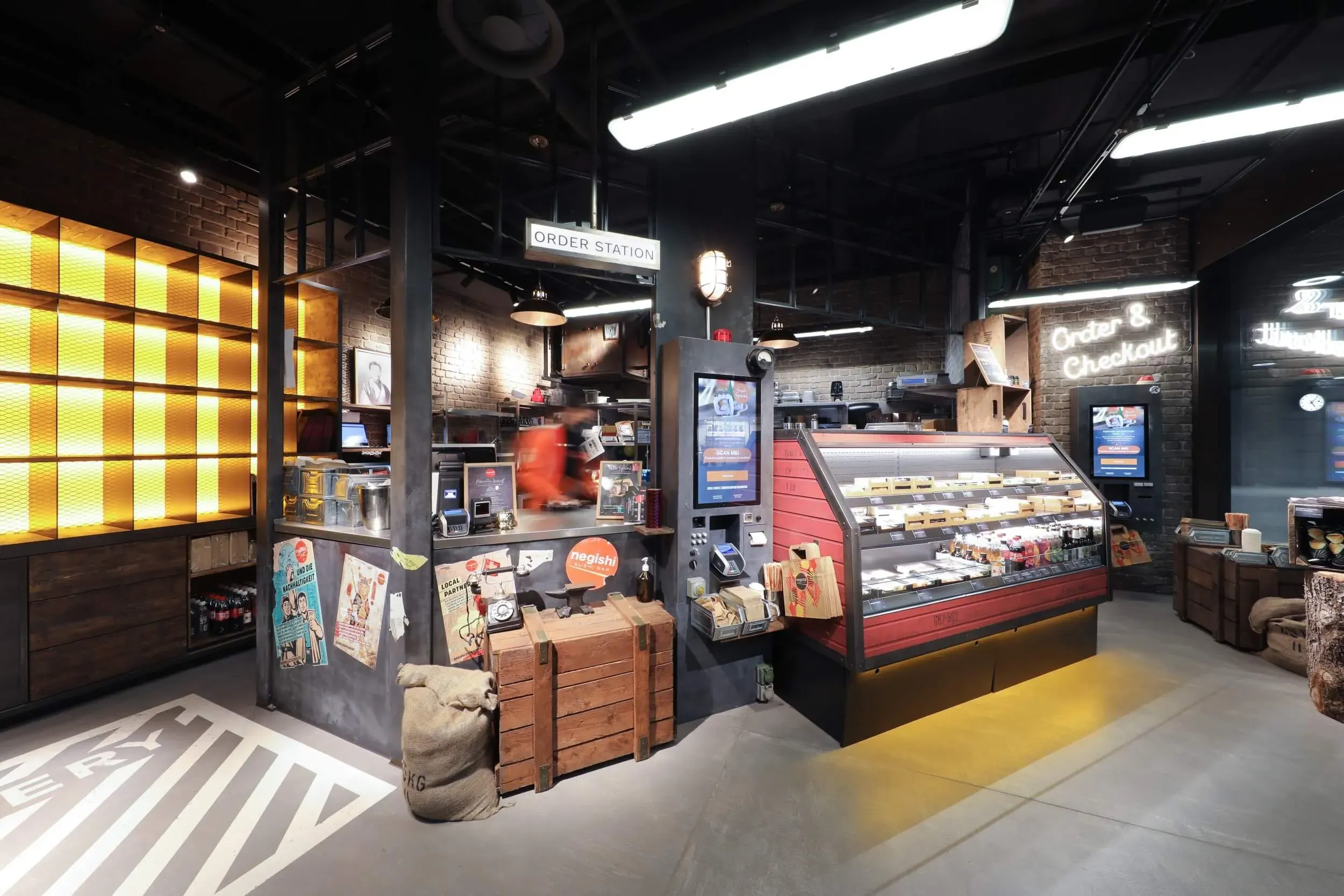
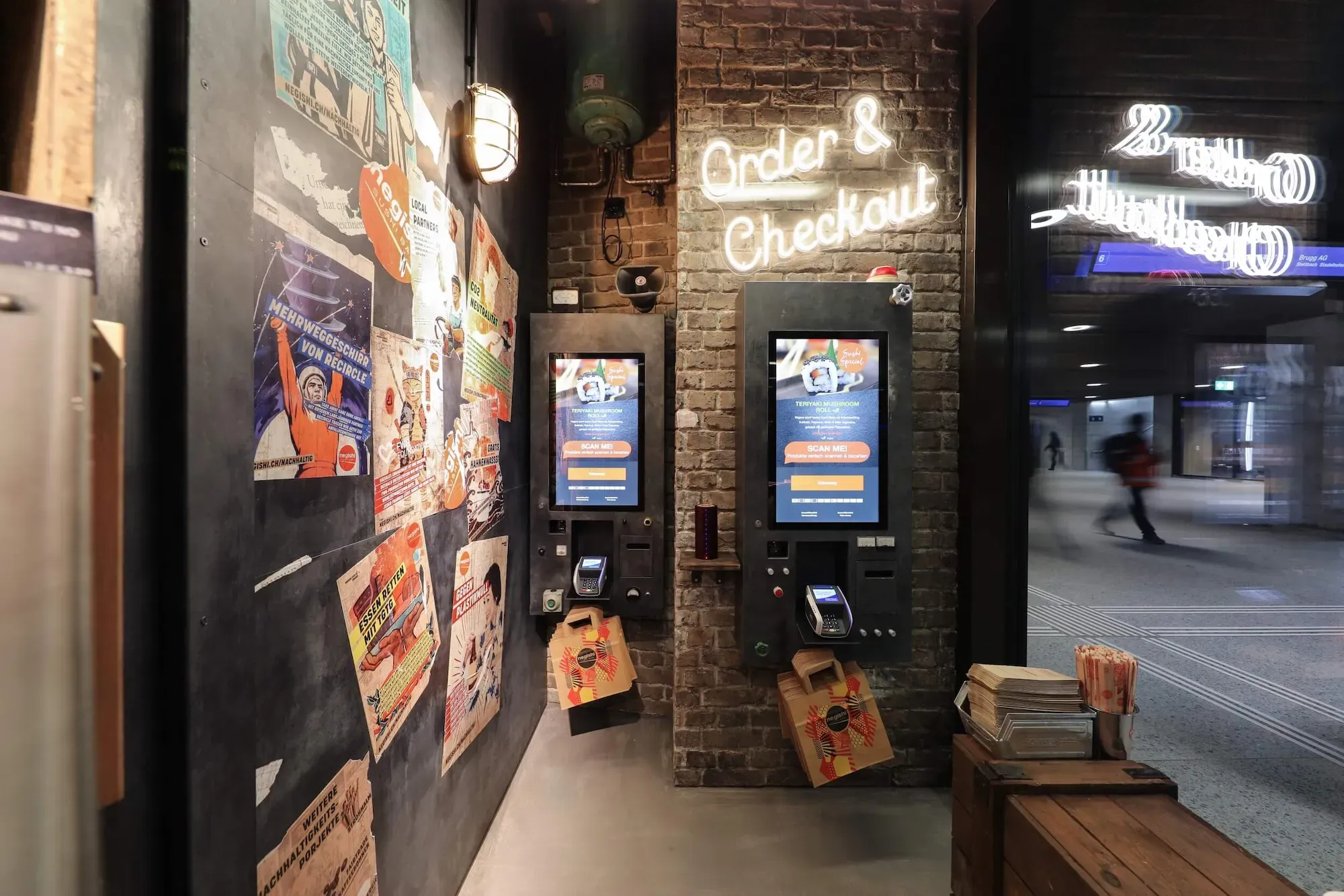
Exposed brick walls cite the industrial architecture of European stations, providing a robust frame for the Take-away concept. Functional elements are staged as infrastructure objects: the sushi box coolers are encased in train-wagon paneling, and the handover stations recall electrical switchgear. Stacked railway sleeper timbers serve as seating, anchoring the project haptically in its context.
Typical projects for system gastronomy take 4–6 months. For Negishi Winterthur, an especially tight schedule was required to minimize disruption to station operations.
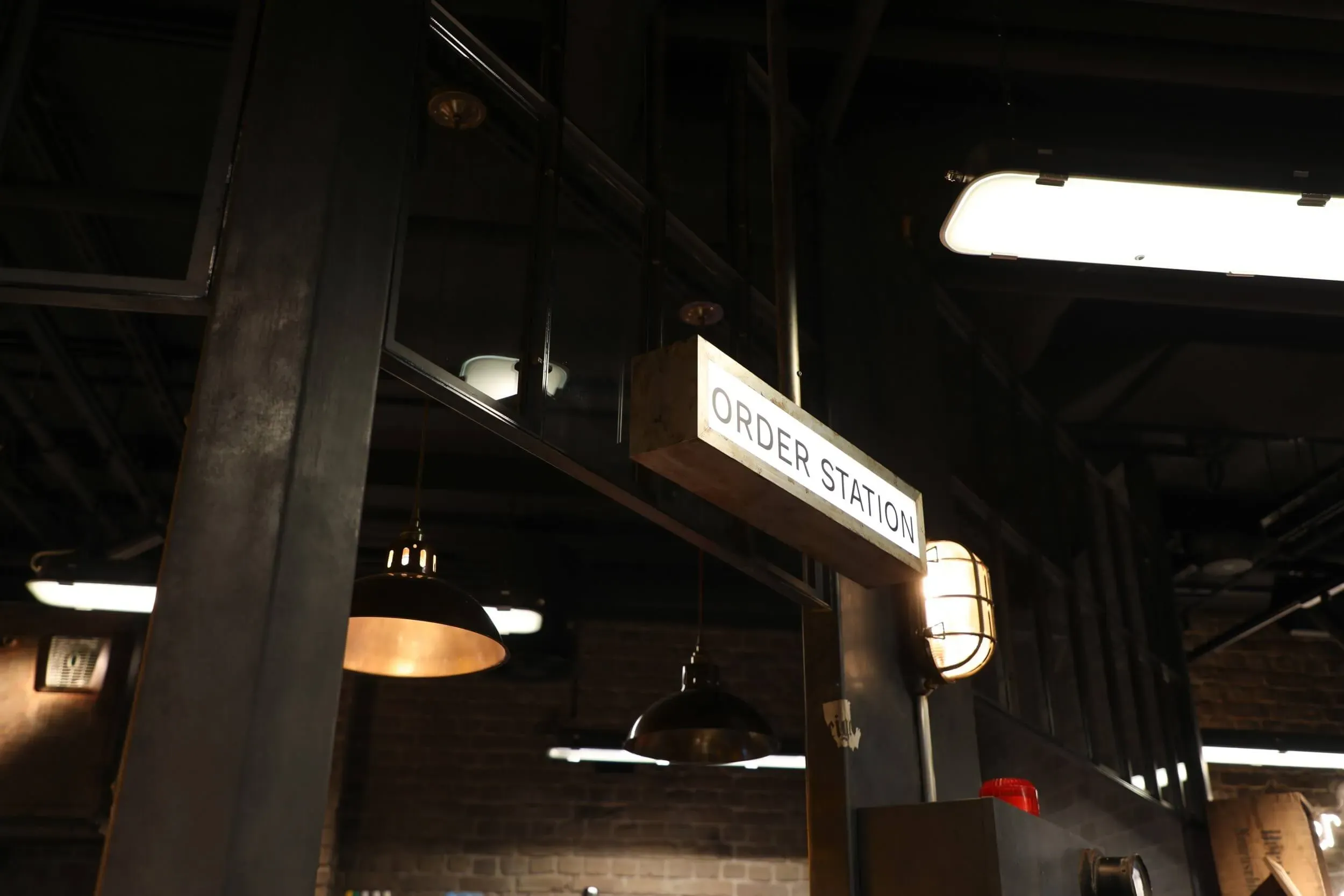
Graphics, signage, and architecture were developed as a unified system. Functions are spatially legible, guiding users intuitively from the entrance to ordering, pick-up, and exit.
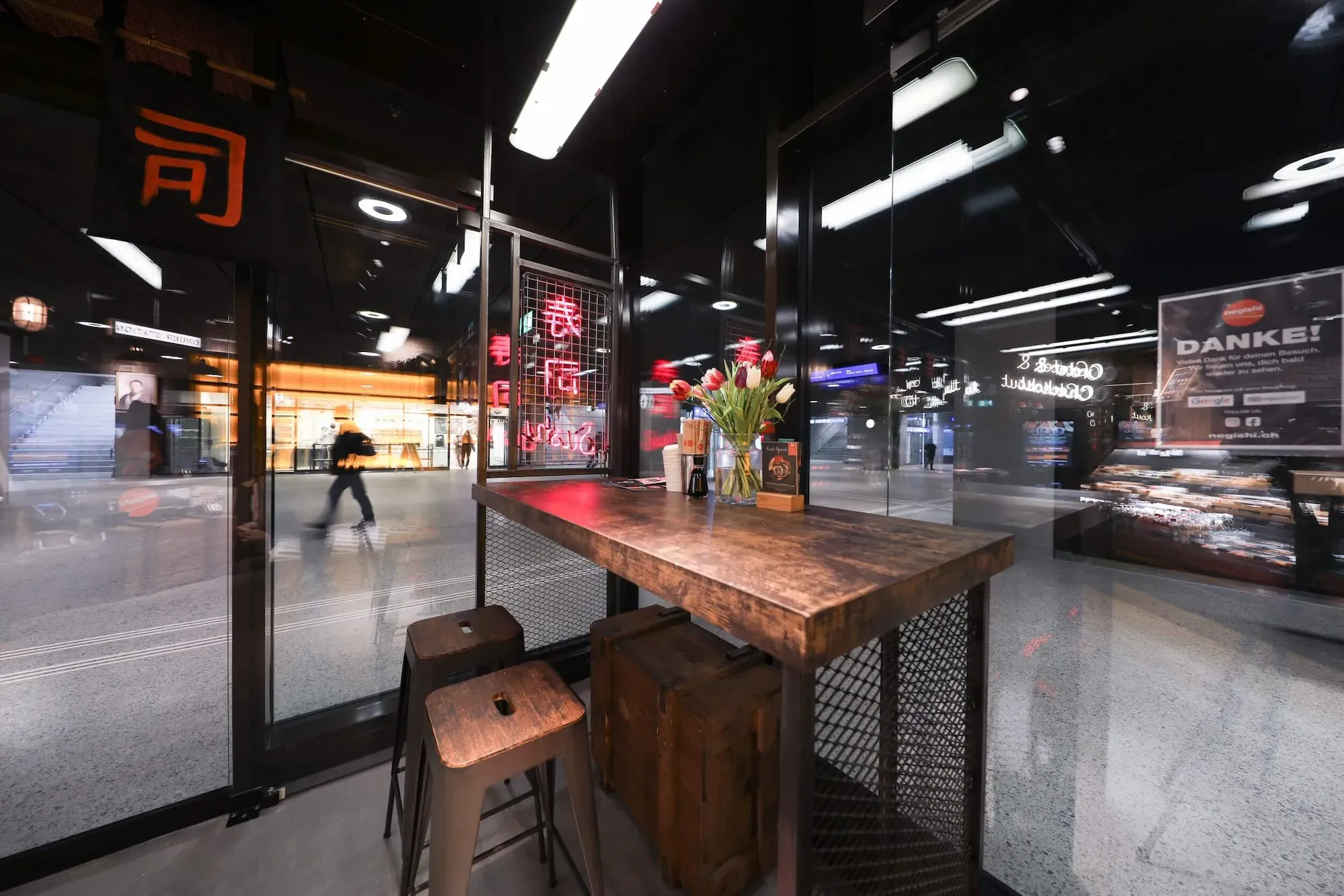
The location is optimized for shorter stays. A designer standing bar allows for consumption without blocking floor space, ensuring high turnover while maintaining the brand's premium identity.
Next Project