
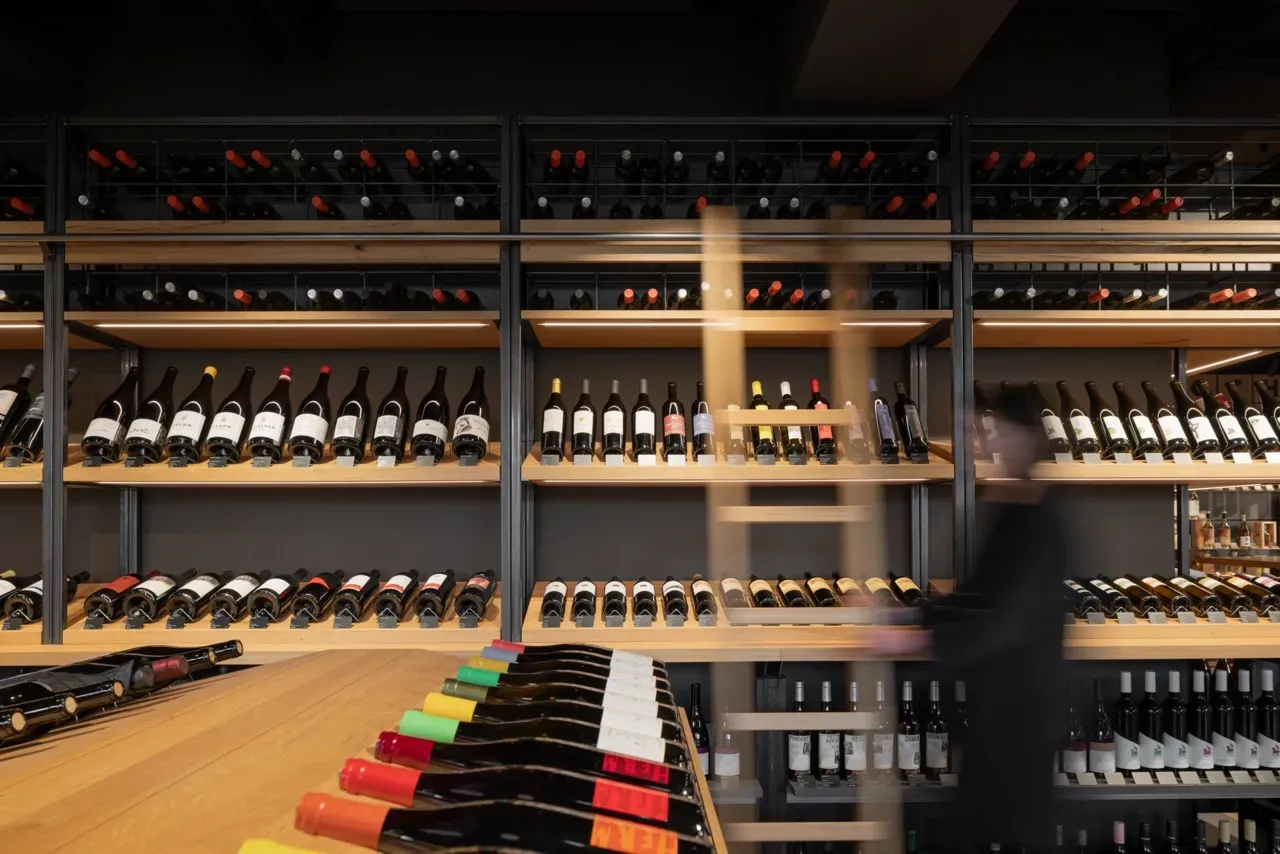
Bold thesis: You want to increase your turnover.
Nowhere is this easier than at the Point of Sale: the place where your customers are already spending money is where they are potentially happy to spend even more.
At least, that is the case if you design your point of sale correctly.
We show you how it works.
Step 1: What does PoS Marketing mean?
First of all, you should know what is behind the abbreviation PoS advertising.
The definition: Point of Sale stands for the point of sale. That is, the place where you actually sell your products to customers. PoS marketing accordingly includes measures that increase turnover at this point.
The explanation has two meanings nowadays:
- Offline: The PoS is your retail store. From the shop window to the shelves to the checkout.
- Online: The PoS is your online shop. From product pages to the shopping cart to the check-out.
A mix is also possible: for example, your customers can pay at the checkout (offline) with a PayPal account (online).
It is important to note the difference from the Point of Purchase (PoP), the point of the purchase. While the PoS shows your view (that of the seller), the PoP refers to the view of the buyer. It is therefore the same place from two different perspectives, both of which you must consider.
Why is the Point of Sale important?
You want to make more turnover, right?
That is why PoS marketing is important. Because when you optimize the point of sale, three things happen:
- Your customers are more likely to buy: If you present your products cleverly, they are more likely to make a purchase decision.
- Your customers buy more: Anyone who buys a product is often happy to take additional offers with them: provided you go about it cleverly.
- Your customers prefer to buy: If the shopping experience with you is inspiring, you turn customers into fans. They will be happy to come back, whether offline or online.
In short: PoS marketing is sales promotion!
Measures, Examples, and Ideas
How do you manage to increase turnover at the point of sale? There are various instruments for this. Let's go through the physical purchase in a retail store:
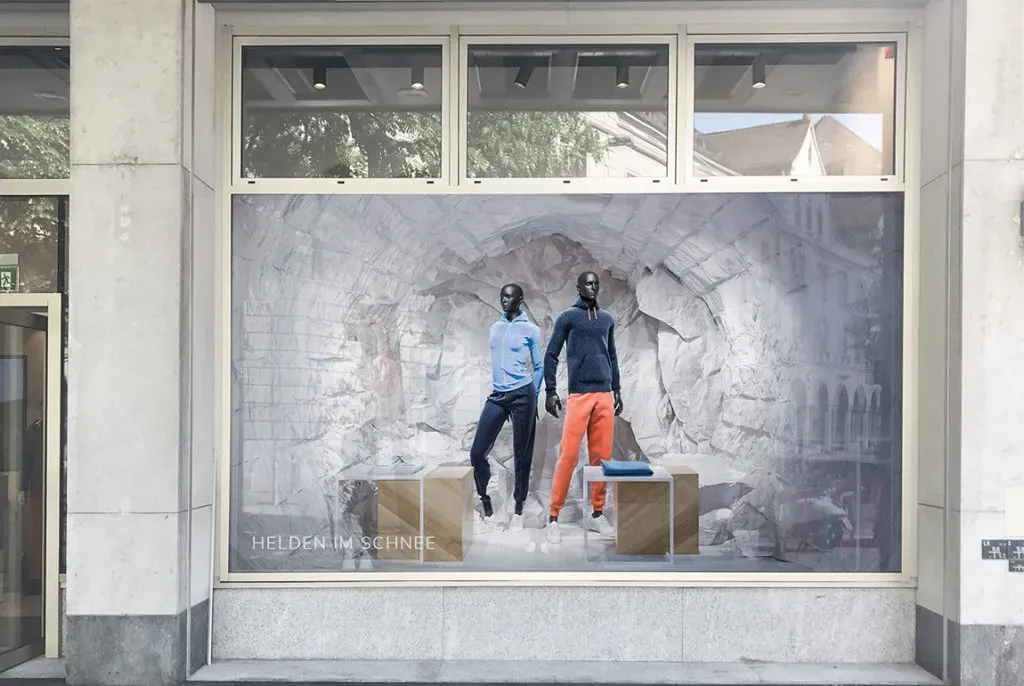
Even before entering, the shop window lures us into the store. The design is important and should arouse interest.
We enter the store. Thanks to clever navigation, we know immediately where we need to go. It guides us to the attractive offers: and in an order in which we put as many products as possible into our cart.
Various advertising materials also draw our attention to bestsellers. Displays, posters, materials like flyers, but also announcements over the loudspeakers.
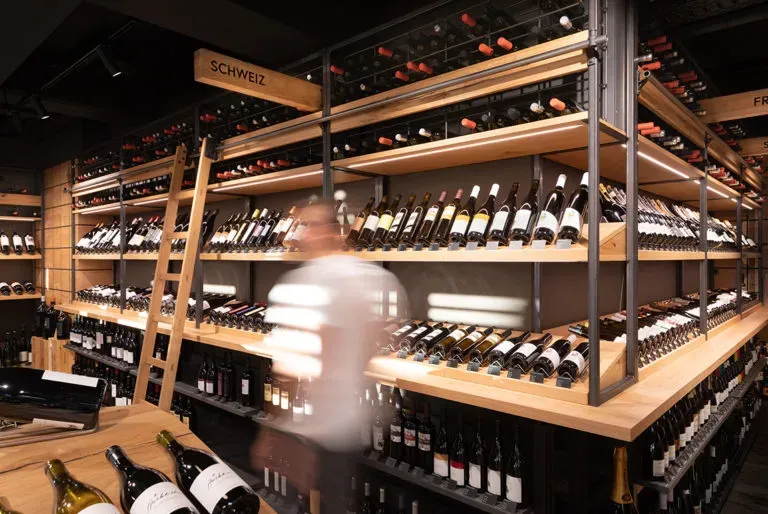
The shelves themselves ensure a presentation that makes the products irresistible. For all the senses: the light, the smell, even the music: everything is right.
Furthermore, price tags draw our attention to offers like "2 for 1" or "-30% discount." This makes us go to the checkout with a good feeling.
Speaking of the checkout: while we are standing at the belt, we impulsively grab a few small things, such as chewing gum or hair ties.
We pay at the self-checkout via Apple Pay. Here we round up the 47.38 to a flat 48 CHF. The difference goes to the store's charity organization.
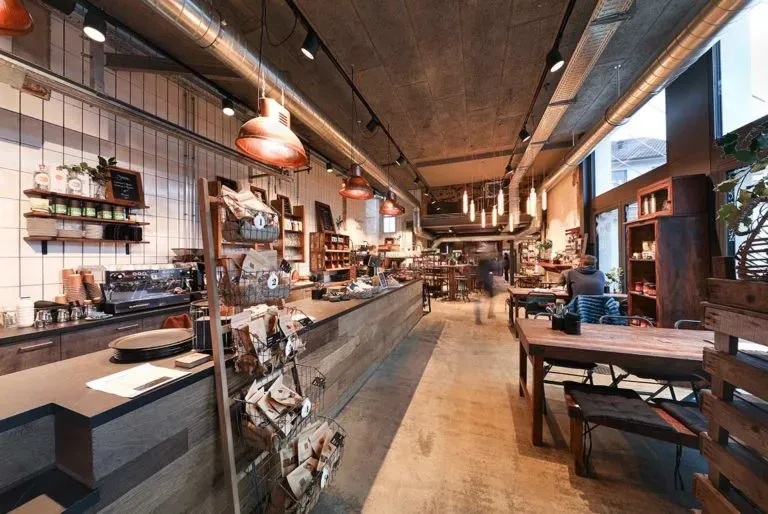
Finally, we leave the shop with the feeling that we will come back: and quickly follow the company's Instagram account when a QR code on the door reminds us to do so.
Now you know what PoS measures are. The next step is to design your own strategy.
Step 2: Analyze the Target Group
What advertising opportunities are there in your online or offline shop?
That depends heavily on your target group. You should answer the following questions:
- Who is currently entering your business? Do you actually want to address a different target group?
- With what intention does your target group enter the store? Do they want to browse, or are they looking specifically for a particular product?
- What do the numbers say: how much do customers spend with you and on which products?
- Why do customers go to you and not to the competition?
- How many of your first-time visitors come back?
Tip: View the purchasing process from the buyer's perspective. Go through your shop with the PoP perspective and observe how you would behave.
Guidelines for your optimal strategy are derived from this analysis.
Step 3: Develop a Strategy and Concept for Sales Promotion
According to your analysis, you should design measures that improve the shopping experience of your target group: and thereby increase your turnover. For example, go through the questions from step #2 for each of the exemplary measures from step #1.
The findings for your strategy will then look something like this:
- Does your target group visit your shop mainly to buy a specific expensive product (such as a camera)? Then offer relatively cheap additional items at the checkout (such as photography textbooks).
- Do you have almost only regular customers and hardly any new customers? Then attract interested parties with a new shop window.
- Do your customers spend relatively little money per purchase? Then offer volume discounts to increase the shopping cart value.
Step 4: Implement the Campaign
Is your strategy ready? Now it's time to bring the measures to life.
The low-budget variant means: doing it yourself, remodeling the shop, and implementing actions. This costs little money and offers a great learning effect: because mistakes are guaranteed. If you choose this option, you should definitely measure your activities. The goal: make a little more turnover with every test.
Alternatively, service providers can help you. If you want to rebuild your online shop, these are usually web designers and e-commerce agencies. For offline needs, shopfitters or interior designers can assist you. Make sure that they not only understand design but, above all, PoS marketing.
What a coincidence: GALA takes care of sales promotion in your retail store. Our interior design studio analyzes your target group and builds a lucrative concept for your store based on that.