
Everyone is shopping online, the city centers are dying out: and the pandemic as well as supply bottlenecks are doing the rest. Do you inevitably have to close your business?
No. At least, not if you prepare and adapt to the trends in retail. Then your sales can grow despite all crises.
Fortunately, GALA is familiar with current scientific studies. Here are the results that you should best implement right now.
7 Current Trends in Retail
Studies say: These new megatrends are increasing in importance.
#1 ONLINE AND OFFLINE ARE CONNECTING
Online shopping is increasing, classic offline shopping is decreasing. But why choose? The brightest future lies ahead for brands that sell both virtually and via physical stores. Because when done correctly, the two channels benefit from each other instead of harming each other.
This is what needs to be done now:
Set up a Click and Collect system that allows people to order online and pick up their delivery offline. Start virtual events such as live-stream shopping or lead your customers through your shop with AR and VR. Add QR codes to your products: those who are not yet ready for a purchase can save your online shop this way instead of searching with the competition.
#2 DIGITAL TECHNOLOGIES SUPPORT RETAIL
Unnecessary tasks? Goodbye. Stressed employees? Never again. Contrary to what many think, digital development offers many opportunities for retail.
This is what needs to be done now:
Automate your warehouse and logistics to optimize processes. Enable self-checkout to relieve your employees. Adapt your prices to current buying interest and your stock. Observe customer behavior via survey screens at the exit.
Read our article on PoS marketing here.
#3 THE CITY CENTER IS NOT DYING OUT AFTER ALL
For years it has been predicted that city centers are dying out. That is correct: but only for the part that does not adapt to the needs of consumers. To ensure you do not belong to that group, you should implement new concepts.
This is what needs to be done now:
Offer your customers services that they cannot get on the internet: custom-made products, personal support, or similar. Lure customers into the city with events: pop-up ranges, live music, Christmas parties. Leave your own business premises: go to trade fairs, street markets, or into collaborations with other shops in the region.
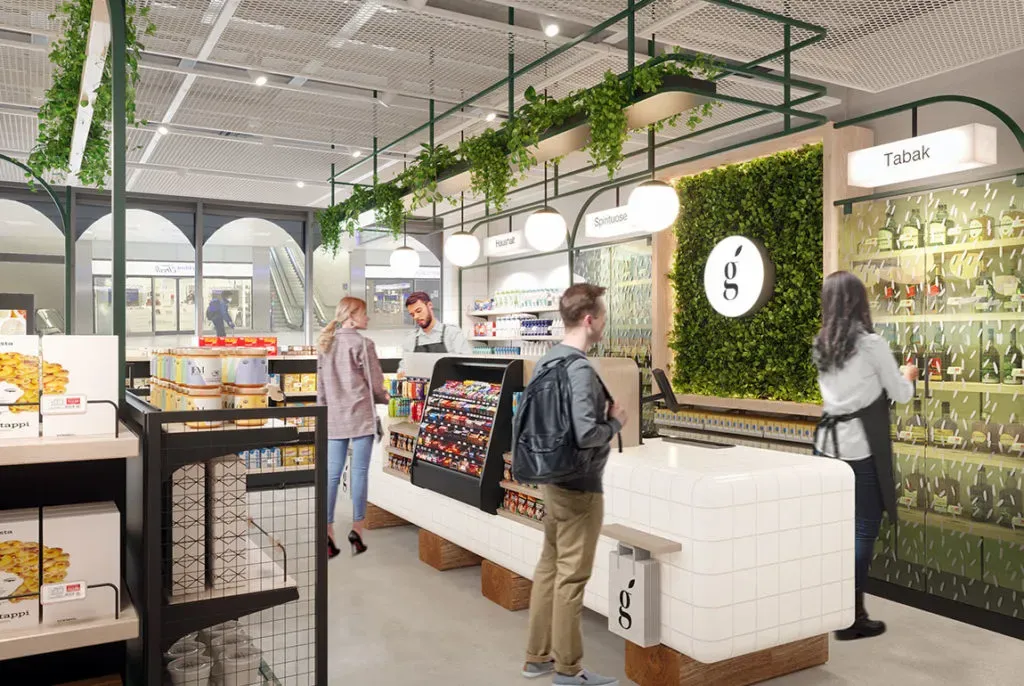
Our concept for the "Supermarket of Tomorrow" combines locality, sustainability, and hygiene with a revenue-increasing shop layout.
#4 SUSTAINABILITY IS A FUTURE FACTOR
Many customers only shop at environmentally conscious companies. Your attitude toward our planet also plays an important role for job candidates.
This is what needs to be done now:
- Rely on recycled raw materials for the next renovation.
- Create a concept to reduce waste.
- Measure and reduce your energy consumption.
#5 EMPLOYEE EXPECTATIONS ARE RISING
In the future, your employees will no longer just want to earn enough money. In fact, other aspects of the job are coming into focus: above all flexibility and a workplace that promotes health.
This is what needs to be done now:
- Test new working models like the 4-day week.
- Optimize work processes to avoid unnecessary stress.
- Provide your team with a break room that supports relaxation.
- Lots of greenery, fresh air, and bright daylight are mandatory.
#6 SWITZERLAND BUYS LOCAL
In an increasingly international world, people seek the feeling of home and security. Small shops with a connection to the environment are therefore in vogue. But large, global chains can also benefit from this tendency.
This is what needs to be done now:
- Expand your range to include products from the region.
- Dedicate a complete shelf to local products.
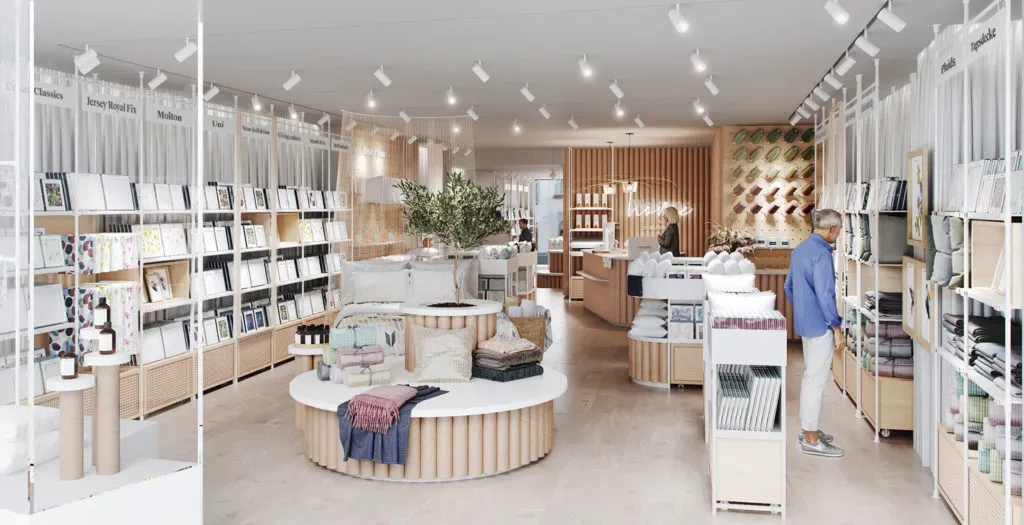
In the studio, customers could put together their own bedding directly in the shop.
#7 HYGIENE REMAINS IMPORTANT
Even after the pandemic, people want to leave your business healthy. Narrow aisles and cramped proximity deter pedestrians from entering your shop. This applies above all to food retail.
This is what needs to be done now:
- Create a hygiene concept for customers and employees.
- Enable contactless payment.
- Guide your customers through your aisles wisely to avoid crowding.
- Use digital tools to control the number of people in the shop.
- Set up disinfection terminals at the entrance and ensure good ventilation.
- Protect the health of your employees, for example, with partitions at the checkout.
Conclusion: These 3 aspects influence stationary retail the most
Whether 2025, 2030, or 2100: retail will always exist. You just have to adapt! It sounds complicated: but it is primarily a matter of three areas:
- Business Model: Your biggest competition is e-commerce. Therefore, you must provide your customers with reasons to visit you on-site: more personal support, a unique shopping experience, and unforgettable events.
- Digitalization: It is clear: those who do not have an online shop or at least a virtual strategy by 2030 will die out. But digitalization goes much further: it strengthens customer loyalty, increases sales, and lowers costs when implemented correctly.
- Interior Design: You only have one chance: if your shop does not inspire new customers, they will prefer to buy online. You must offer an experience that stays in the mind. And at the same time, optimize the shop concept so that sales increase and employees remain happy.
Is your interior design ready for the megatrends?
We would be happy to design a GALA concept for your retail business.
Let's talk about your strategy.